
Food guide · Fri, Nov 20, 2026
Reading Terminal Market: how to eat a city block
Reading Terminal Market, at 12th and Arch Streets in Center City, is one of the country's oldest public markets: more than 80 merchants under the old Reading Railroad train shed, open daily from 8am to 6pm, free to enter. How to work the aisles, when to go, the Sunday rule that catches visitors out, and how the market anchors a Center City food day, with Restaurant Week on the horizon.
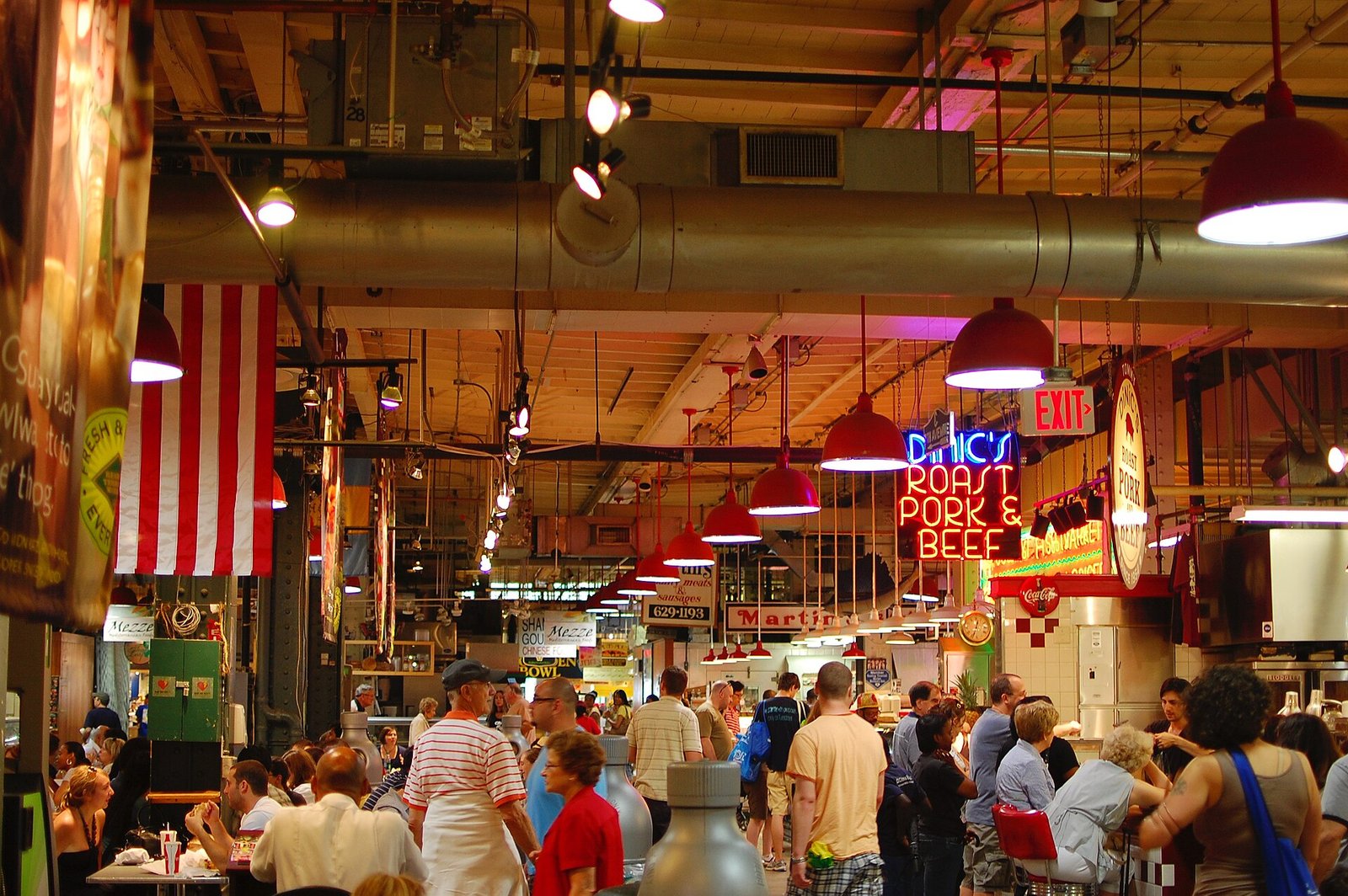
Some food halls are designed. Reading Terminal Market grew. It fills a full city block under the old Reading Railroad train shed at 12th and Arch Streets in Center City, more than 80 merchants selling produce, meats, baked goods, prepared food and flowers, and it has the energy of a place that feeds its own city first and visitors second. It is one of the country's oldest public markets, open daily, free to enter, and it rewards a method. This guide is that method: how to walk it, when to come, what the aisles are for, and the one rule about Sundays that every first visit should know before it is planned around a stall that will not be there.
The shape of the market
The market sits directly beside the Pennsylvania Convention Center, in the middle of Center City's hotel district, which makes it the easiest great meal in Philadelphia to reach and the hardest to leave quickly. Entry is free. You pay the merchants for what you eat and buy, and the correct first move is not to buy anything at all. Walk the whole market once, slowly, end to end, before you commit to a lunch. The right lunch here is a decision made by walking past the alternatives first, and the market is built to tempt you into the wrong one early: the first aisle smells as good as the last, and the visitor who eats at the first counter they see has spent their appetite before finding the stall they would have chosen.
The aisles divide by trade. Produce and flowers toward one side, butchers and fish and cheese through the middle, baked goods and sweets where the ovens are, and prepared food everywhere, because this is a market that expects you to eat in it, standing at a counter or perched at a table in the seating areas, alongside office workers, convention delegates and families doing the weekly shop. That mixture is the market's character. It is not a food court wearing a market costume. It is a working market that happens to contain some of the best eating in the city.
When to go
The market opens Monday to Sunday, 8am to 6pm, and the hours inside those hours matter. Weekday mornings before the lunch crowd are the calmest time to browse: the produce is at its fullest, the counters are unhurried, and you can talk to the merchants, which in this market is half the pleasure. The lunch hours, above all on convention days and Saturdays, are the market at full roar, queues at the famous counters and every seat taken. That version is fun if you have come for the theater of it, and a poor plan if you have come to shop.
Then there is the Sunday rule, and it is the single most useful fact in this guide: all of the market's Pennsylvania Dutch merchants are closed on Sundays. The Pennsylvania Dutch stalls are a defining part of Reading Terminal, the Lancaster County presence inside a city market, and a Sunday visit planned around them will miss them entirely. Come on a Saturday for the full market, Dutch stalls included, and accept the crowd as the price. Come on a weekday morning for the calm version. Come on a Sunday knowing exactly which market you are getting.
Eating the market, and the food day around it
Work a visit by appetite, in courses, the way the market invites. Something baked to start, while you walk. A counter lunch as the main event, chosen after the full circuit, not before. Something sweet and something to carry home at the end: the market is a place to provision a trip as well as to eat a meal, and a hotel room with market cheese, bread and fruit in it is a better hotel room. Individual merchant hours vary inside the market's own hours, so a stall you have set your heart on deserves a check on the market's official site before a special trip.
The market also anchors the wider Center City food day. It sits minutes from City Hall, from the Convention Center and from the Avenue of the Arts, so it pairs with almost any central itinerary: the market for lunch, the museums or the shops after, and dinner in the neighborhoods around it. And it is the warm-up act for the city's great food season. Center City District Restaurant Week runs from Sunday 24 January to Saturday 6 February 2027, with more than 100 restaurants offering three-course dinners at set prices and $20 lunches; our separate Restaurant Week guide covers it in full, and the market is where to spend the mornings of that same trip.
The other market: a morning on 9th Street
Philadelphia is lucky enough to have the comparison built in. Across town in Bella Vista, the Italian Market runs along South 9th Street from Fitzwater to Wharton: a working open-air strip of produce stalls, butchers, cheese shops, bakeries and coffee roasters, now layered with the Mexican and Asian businesses of the surrounding streets. The association that runs it calls it the nation's oldest continuously operating outdoor market, and it still serves the neighborhood first and visitors second. It is everything Reading Terminal is not: outdoors, stretched along a street rather than gathered under a roof, shopped with a basket rather than eaten at a counter. Do both on the same trip and you understand the city's food geography. Reading Terminal is the center's market, the one under the train shed where the whole city converges. The Italian Market is the neighborhood's market, the one a district built for itself over generations. The Visitor Center on 9th Street, open Tuesday to Saturday and Sunday mornings, is the orientation point; individual shops and stalls keep their own hours. A food trip that only does the famous one has done half the work.
Sleeping beside it
If food is the point of the trip, sleep within walking distance of 12th and Arch. The Philadelphia Marriott Downtown, at 1201 Market Street, is a short walk from the market, and the Loews Philadelphia Hotel, at 1200 Market Street inside the historic PSFS Building across from the Convention Center, is closer still to the market's doors. Both are the Center City hotels this site has verified, and both make the market your canteen for the whole stay: breakfast before the crowds, lunch between plans, provisions for the room.
Stays in Center Cityvia Booking.com · affiliate link
A note on manners, from the regulars
A working market runs on small courtesies, and the visitor who learns them eats better. Keep moving in the aisles at lunch hour; the person behind you is on a break, not a holiday. Order at the counter, eat at the seating, and clear your tray, because the next party is circling with theirs. Ask before photographing a stallholder's produce, and buy something from the stalls you linger at longest. None of this is written down anywhere in the building, and all of it is enforced by the crowd itself, gently and completely. The market has fed office workers, conventioneers, chefs doing their own shopping and generations of the same families, often at the same counter on the same morning. Join that crowd on its own terms and it will feed you the way it feeds its own.
Every city has a room that explains it. In Philadelphia that room has a train shed roof, more than 80 merchants, and lunch being decided by a slow walk past everything you could have chosen instead. Go hungry, go early, walk the whole market once before you buy anything at all, leave room for the course you have not found yet, and do not go on a Sunday for the Dutch stalls.
More reading on the articles page, or go straight to the events calendar.