
City guide · Fri, Nov 20, 2026
Old City and Independence Hall: Philadelphia's founding quarter
Old City holds the densest half day in American history: Independence Hall, where the Declaration and the Constitution were signed, the Liberty Bell across the mall, the National Constitution Center, the Museum of the American Revolution and Elfreth's Alley, all inside a few walkable blocks at 5th and Chestnut. How to sequence it, how the tickets actually work, and why sleeping in Old City changes the visit.
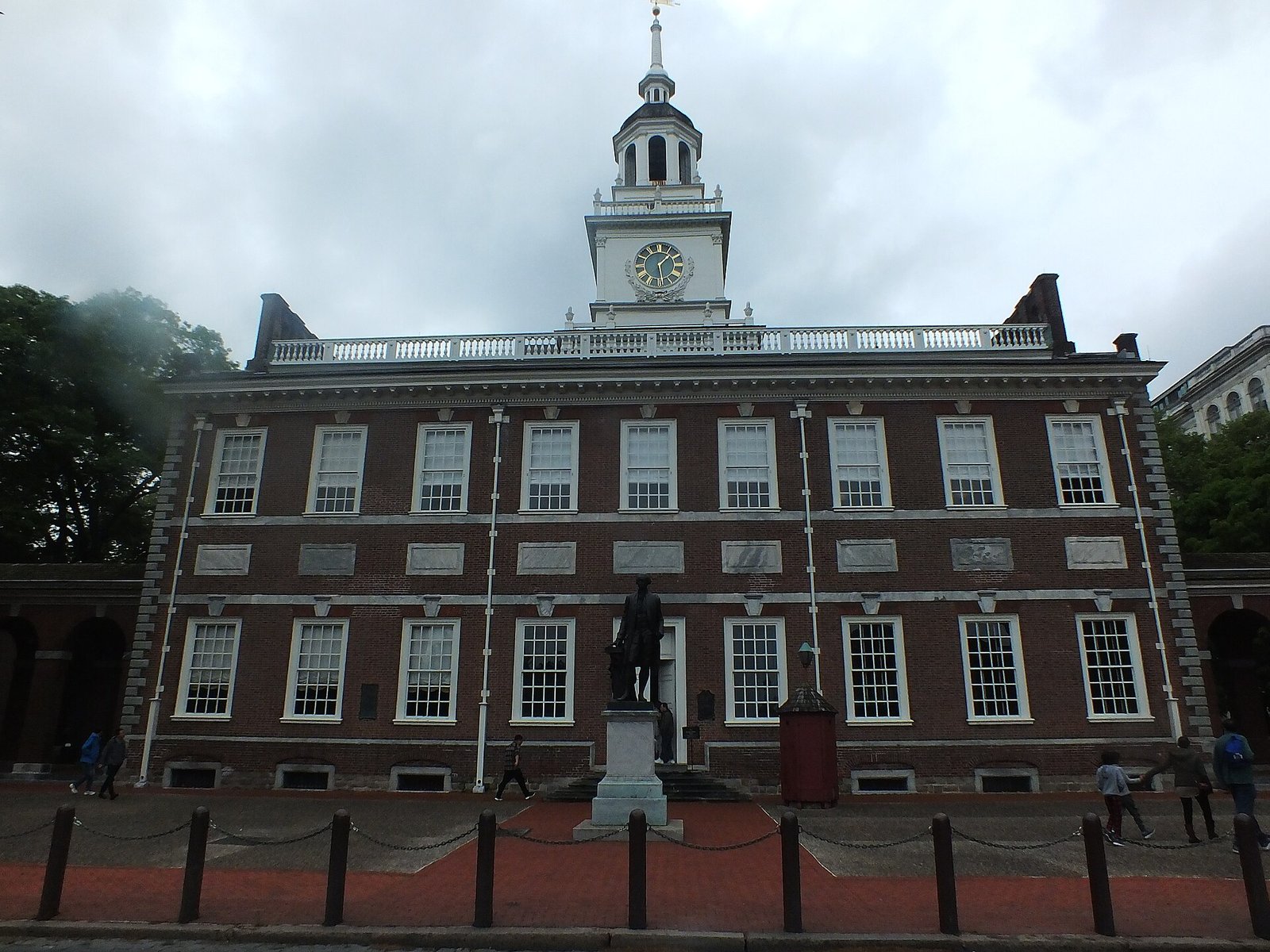
Most cities make you travel for their history. Philadelphia put its in one neighborhood and left it there. Old City, the grid between the Delaware River and Independence Mall, holds the room where the United States was argued into existence, the bell that became its symbol, two museums that tell the story from opposite ends, and a cobbled alley where people still live in houses older than the republic. It is the first thing most visitors do in Philadelphia, and it deserves better than a rushed hour between other plans. This guide works it properly: the sequence, the ticket rules that catch people out, and the case for sleeping inside the quarter itself. Our events calendar carries Old City's listings, including the First Fridays when its gallery streets open late.
Start with the Hall, and understand its tickets
Independence Hall stands at 520 Chestnut Street, between 5th and 6th Streets, and the visit has two halves with different rules. The morning open house runs daily from 9am to 10:30am and needs no ticket: you walk in and stand in the building on your own schedule. After that, from 10:40am to 4:40pm, entry is by guided tour every 20 minutes, and those tours are ticketed. The tours are free, but the timed tickets, distributed through Recreation.gov, carry a $1 fee per ticket, so the honest summary is: free, ticketed, and worth arranging ahead rather than at the door on a busy day. Both halves center on the same room, the Assembly Room, where the Declaration of Independence and the Constitution were debated and signed. Give the room its moment. It is smaller than the paintings suggest, and that is the point: the founding of a country turns out to have happened in a space the size of a large classroom, by men who could all hear each other.
Across the mall, the Liberty Bell Center is simpler: free, no ticket, open daily from 9am to 5pm. The bell hangs in a glass pavilion with Independence Hall framed in the window behind it, which is the photograph everyone takes and the right one. Both buildings sit inside a security screened square, so build the screening line into your timings, above all on weekend mornings when the quarter fills.
The two museums, in the right order
Old City's museums divide the story between them, and the order matters. Start with the Museum of the American Revolution, at 101 South Third Street, open daily from 10am to 5pm. It tells the Revolution as a story rather than a parade of generals, with space given to soldiers, women, Native nations and enslaved people alongside the famous names, and its centerpiece is George Washington's headquarters tent, shown in its own theater. Tickets are timed, and advance reservations are strongly recommended: adults pay $25 online or $27 in person, youth aged 6 to 17 pay $14, and children 5 and under go free. The generous detail is that a ticket is good for two consecutive days, so a split visit costs nothing extra.
Then walk up to the National Constitution Center at 525 Arch Street, on Independence Mall a few steps from the Hall. It is a museum devoted to a single document: the main exhibition works through the Constitution article by article with interactive exhibits, and Signers' Hall sets you among life-size bronze statues of the men who signed it. Adults pay $19.95 online or $24.95 on site, with lower prices for seniors and youth, and general admission covers the daily programs. One scheduling fact governs the pairing: the Constitution Center is open Wednesday to Sunday, 10am to 5pm, and closed on Monday and Tuesday. Plan the two-museum day for Wednesday onward, or put the Revolution museum on the closed days and the Constitution Center later in the trip.
The alley, and the quarter beyond the icons
When the big rooms are done, walk east to Elfreth's Alley, at numbers 124 and 126 and along the lane between 2nd Street and the river. The Elfreth's Alley Association describes it as one of the oldest continuously inhabited residential streets in the United States, and the visit respects that: the alley is a public street, open for a stroll at any time, and the houses are homes, not exhibits. The small museum at 124 and 126, open Friday to Sunday from noon to 4pm in season, charges $3 for adults and $2 for children aged 7 to 12, sold in person only; guided tours including museum admission run on Saturday and Sunday afternoons at $10 for adults and $5 for children. Twenty minutes in the alley recalibrates everything the big museums told you: this is what the city the founders lived in actually felt like at street level.
The rest of Old City fills the gaps between the icons honestly. It is a working gallery district, and on First Fridays the galleries along North 2nd and 3rd Streets open for the evening, which is the quarter at its most alive and the best reason to be sleeping here rather than visiting. The river end of the quarter, Penn's Landing and the Delaware waterfront, is the evening walk. And the quarter eats well at every level, from market stalls to the dining rooms that have made it a destination in its own right.
The quarter in the evening
Old City does not close when the museums do. The gallery streets along North 2nd and 3rd Streets are the quarter's second act, and on First Fridays, the next of which falls on Friday 4 December 2026, the galleries open for the evening and the streets fill with the city's art crowd rather than its tour groups. It is the single best evening to be based in the quarter, and it costs nothing but the walk. East of the galleries, the Delaware waterfront at Penn's Landing is the quarter's front porch: in winter the Independence Blue Cross RiverRink Winterfest, open from Friday 27 November 2026 at 101 South Columbus Boulevard, puts the ice on the river a short walk from the historic blocks, so a day that began in the Assembly Room can end with skates and the bridge lit up beyond the rink. History in the morning, the galleries at dusk, the river at night: that is the full Old City day, and it is only available to the visitor who stays for all of it.
Sleeping in Old City
The case for an Old City hotel is the early morning. The Hall's open house starts at 9am, the screening lines build by mid-morning, and the quarter in the first hour of the day, before the school groups arrive, is a different and better place. Sleeping here puts you inside that hour. The hotels this site has verified in Old City are the Kimpton Hotel Monaco Philadelphia, Penn's View Hotel and the Philadelphia Marriott Old City, each a short walk from the Mall. The trade is honest: Old City is quieter at night than Center City, and the stadium complex and the Parkway museums are rides rather than walks. For a history-first trip, it is the right trade.
Stays in Old Cityvia Booking.com · affiliate link
One more practical layer before the order of the day: the quarter is compact enough that none of this needs transport. The Hall, the Bell, both museums and the alley sit inside a grid you can cross in ten minutes in any direction, and the Market-Frankford Line's Old City stops put the rest of the city one ride away when the day is done. What the quarter asks for is not logistics but time: a half day is the minimum the icons deserve, a full day is the honest allocation, and the visitor who gives it the full day, with the evening's galleries at the end, is the one who leaves understanding why this city, and not another, is where the country was started.
Do the quarter in this order and it adds up to more than its parts: the tent and the war in the morning, the room where it was settled before lunch, the document itself in the afternoon, and a cobbled alley at the end of the day to remind you that all of it happened in a real city, to real people, on streets you can still walk.
More reading on the articles page, or go straight to the events calendar.